Summary:
You’ve probably gotten a quote — maybe two or three — and noticed they don’t match. One contractor says $12,000. Another says $28,000. And you’re left wondering if someone’s padding their numbers or if someone else is leaving something out. More often than not, it’s the second one.
A full bathroom remodel isn’t just swapping out fixtures and laying new tile. It’s a coordinated construction project involving multiple trades, permitting, and decisions that affect how your bathroom holds up for the next 20 years. Understanding what’s actually included is the only way to compare quotes fairly — and make a decision you won’t regret.
What a Full Bathroom Remodel Actually Covers
At the most basic level, a full bathroom remodel covers everything from the walls in. That means demolition, rough-in plumbing, electrical updates, waterproofing, tile work, vanity and fixture installation, and final trim and paint. Each of those phases involves a different trade, and they have to happen in the right order.
The distinction that matters most is the difference between a cosmetic refresh and a true gut renovation. A cosmetic refresh might mean a new vanity, updated lighting, and fresh tile over existing surfaces. A gut renovation means everything comes out — down to the studs — and what goes back in is entirely new. Most full remodels in Suffolk County fall somewhere in between, but the older the home, the closer it tends to drift toward a full gut.
The Sequence of Work: Why the Order of Trades Matters
One of the things homeowners don’t always realize is that a bathroom remodel isn’t one job — it’s five or six different jobs that have to happen in sequence. When that sequence breaks down, the project stalls, quality suffers, and you end up paying for corrections that should never have been necessary.
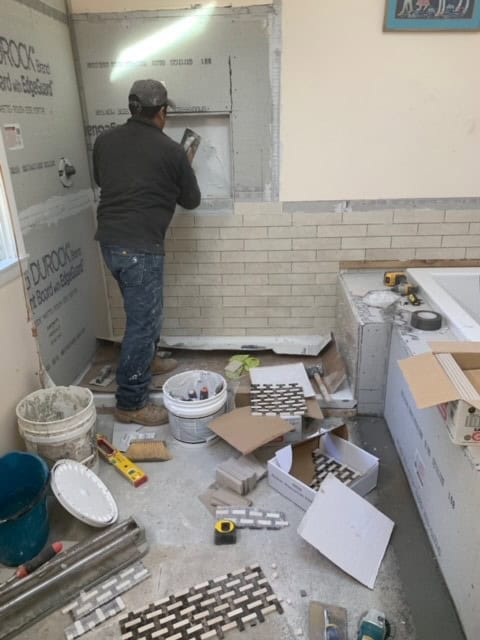
The standard order runs like this: demolition first, then rough-in plumbing, then rough-in electrical, then waterproofing, then shower tile, then floor tile, then vanity installation, then toilet, then fixtures and accessories, and finally paint, trim, and a final walkthrough. Each phase has to be completed and often inspected before the next one begins. A plumber can’t rough in new supply lines until the old ones are out. A tile setter can’t waterproof a shower until the plumber is done. It’s a chain, and every link matters.
This is also why a general contractor who coordinates all the trades is worth the investment. When one person is managing the schedule and accountable for the outcome, things move in order. When you’re hiring a plumber, an electrician, and a tile guy separately and hoping they show up in the right sequence — that’s where projects fall apart.
For homeowners throughout Suffolk County’s older neighborhoods, the demolition phase often surfaces surprises. Cast iron drain lines and galvanized supply piping are common in homes built in the 1950s, 1960s, and 1970s — which describes a large portion of the housing stock across communities like Patchogue and beyond. When those materials are exposed during a gut renovation, they usually need to be replaced. It’s not a contractor trying to add to your bill. It’s infrastructure that was already past its useful life, and tiling over it doesn’t make it less of a problem.
That’s why we always recommend setting aside a contingency budget — typically 10 to 15 percent for a non-gut remodel, and 15 to 20 percent for a full gut renovation. Not because something will definitely go wrong, but because in an older home, something often does. Knowing that going in keeps the project from derailing when it happens.
Waterproofing, Ventilation, and Why Long Island Homes Need Both Done Right
Waterproofing is one of those things that’s invisible when it’s done correctly and catastrophic when it isn’t. In a bathroom, every wet surface — the shower walls, the shower base, the seams, the corners, the areas around fixtures — needs to be properly waterproofed before tile goes up. If it’s not, water finds its way into the wall cavity, and mold follows.
This isn’t a generic concern. Long Island’s coastal proximity — the Great South Bay, the Atlantic, the Sound — means humidity levels here are consistently higher than in inland markets. A bathroom that isn’t properly ventilated and waterproofed will show the effects faster than the same bathroom built in a drier climate. We use mold-resistant materials and proper ventilation techniques as standard practice, not as an upgrade, because the local climate makes them necessary.
Ventilation is the other half of the equation. A bathroom exhaust fan that’s properly sized and vented to the exterior — not just into the attic — makes a real difference in how the space holds up over time. It’s a detail that’s easy to cut corners on and easy to miss during a final walkthrough if you don’t know what to look for.
The materials you choose for the wet areas matter too. Porcelain tile is a strong choice for both floors and shower walls because of its low porosity and durability. Quartz surfaces for vanity tops hold up well in high-humidity environments. These aren’t luxury choices for their own sake — they’re practical choices for a Long Island bathroom that’s expected to last.
A quality remodel also addresses the electrical side of the wet area. GFCI outlets are required by code near water sources in bathrooms, and any remodel that involves electrical work needs to meet current code — which is another reason permits exist and why they matter.
Permits, Licensing, and What Suffolk County Homeowners Should Know
Permits come up in almost every conversation about bathroom remodels, and they’re worth understanding clearly. In Suffolk County, a full bathroom remodel that involves plumbing changes, electrical work, or structural modifications requires a building permit. That permit is processed through your local town’s building department — not the county — and each of Suffolk County’s ten towns runs its own process with its own fee schedule.
Most bathroom remodel permits in the county run between $200 and $600 depending on the scope and the municipality. It’s not a huge number relative to the overall project cost, but skipping it creates real problems down the road.
What Happens If You Skip the Permit on a Suffolk County Bathroom Remodel?
Unpermitted work is one of the most common complications that surfaces during a home sale on Long Island. When a buyer’s attorney or home inspector flags work that was done without permits, it can delay or kill the transaction — and in a market where homes move fast and competition is fierce, that’s not a risk worth taking over a permit fee.
Beyond the real estate implications, unpermitted work can also affect your homeowner’s insurance. If a claim involves a bathroom that was renovated without proper permits, the insurer may have grounds to deny coverage. That’s a scenario most homeowners never consider when a contractor suggests skipping the paperwork to save time.
There’s also the question of who pulls the permit. When a homeowner pulls their own permit, they become the contractor of record. That means they’re legally responsible for the work meeting code — not the contractor who actually did it. Any contractor who suggests the homeowner pull the permit is transferring liability in a way that should raise a flag.
We handle the permitting process as part of the project. That means we know which town’s building department applies to your address, what documentation is required, and how to keep the project moving through inspections without unnecessary delays. In a county where Brookhaven, Islip, Huntington, Babylon, and the other towns each run their own process, that local knowledge matters.
Suffolk County also requires home improvement contractors to hold a valid license issued by the Department of Consumer Affairs. It’s a legal requirement, and it’s verifiable. Before you hire anyone for a bathroom remodel in this county, ask for their license number and check it. We’re licensed and insured, and we have no problem providing that documentation upfront.
Common Questions Suffolk County Homeowners Ask Before Starting a Bathroom Remodel
One question we hear often is how long a full bathroom remodel actually takes. The honest answer is that a full remodel — from the first planning conversation to the final walkthrough — typically runs six weeks to three months depending on scope, material lead times, and what’s found behind the walls. A cosmetic refresh with no plumbing or electrical changes can move faster. A full gut renovation in a 1960s colonial where the plumbing needs updating will take longer. The timeline we give you at the start of the project is based on a realistic assessment of the scope, not an optimistic number designed to get you to sign.
Another common question is whether a bathroom remodel adds value to a home. The short answer is yes, meaningfully. A mid-range bathroom remodel typically recoups approximately 70 to 85 percent of its cost at resale. In a Suffolk County market where the average home value is around $723,980 and competition among buyers is real, a renovated bathroom isn’t just a quality-of-life improvement — it’s a practical financial decision.
People also ask about what the cost difference is between a guest bath update and a full gut renovation. A guest bathroom update — new vanity, toilet, tile refresh — typically runs $8,000 to $18,000 in this market. A full down-to-studs renovation with new plumbing and proper waterproofing generally falls in the $15,000 to $35,000 range and up depending on materials and scope. Those ranges reflect what projects actually cost in Suffolk County, not national averages that don’t account for local labor and material costs.
Finally, homeowners often ask what separates a good contractor from a bad one in this space. Written, itemized estimates are one of the clearest signals. A detailed estimate that breaks down labor, materials, and scope by phase gives you something real to compare. A vague number on a napkin doesn’t. Crew consistency matters too — the same people on your job from start to finish means better quality control and clearer accountability. And responsiveness before the project starts is a reliable predictor of how communication will go once work is underway.
Ready to Plan Your Bathroom Remodel in Suffolk County?
A full bathroom remodel is a real construction project — not just a design exercise. Understanding what’s included, how the trades sequence, and what local factors affect your project puts you in a much better position before you ever get a quote.
The homes in Suffolk County have specific realities: aging infrastructure, coastal humidity, town-by-town permitting, and a real estate market where the condition of your home directly affects its value. A contractor who understands those realities isn’t just easier to work with — they’re less likely to leave you with surprises.
If you’re planning a bathroom remodel and want to talk through the scope with someone who knows this market, Rich’s Construction is based right here in Patchogue and serves homeowners throughout Suffolk County. Reach out and we’ll give you a straight answer about what your project actually involves.