Summary:
If you own a home in Suffolk County, you already know what winter does here. It’s not the sustained deep freeze of upstate New York — it’s the back-and-forth. Above freezing, below freezing, a nor’easter, then a warm week, then another hard freeze. That pattern is rough on roofs, foundations, concrete, and caulk in ways that aren’t always obvious until something fails.
Spring is your window to find those problems while they’re still minor. This checklist is built for Long Island homes specifically — not a generic national template — so you’re checking for the things that actually matter here.
Complete Home Maintenance Spring Checklist for Suffolk County Homeowners
Most spring maintenance guides read like they were written for a house in Phoenix. They skip the salt air, the freeze-thaw damage, the cesspool systems, and the nor’easter aftermath that Suffolk County homeowners actually deal with. This checklist doesn’t.
Work through it in sections — exterior first, then interior, then your home’s mechanical systems. You don’t need to do it all in one weekend. What matters is that you do it before the summer humidity arrives and turns any moisture issue into a much bigger problem.
Exterior Inspection: What to Check After a Long Island Winter
Start on the outside. Walk the perimeter of your home slowly, and look up more than you think you need to.
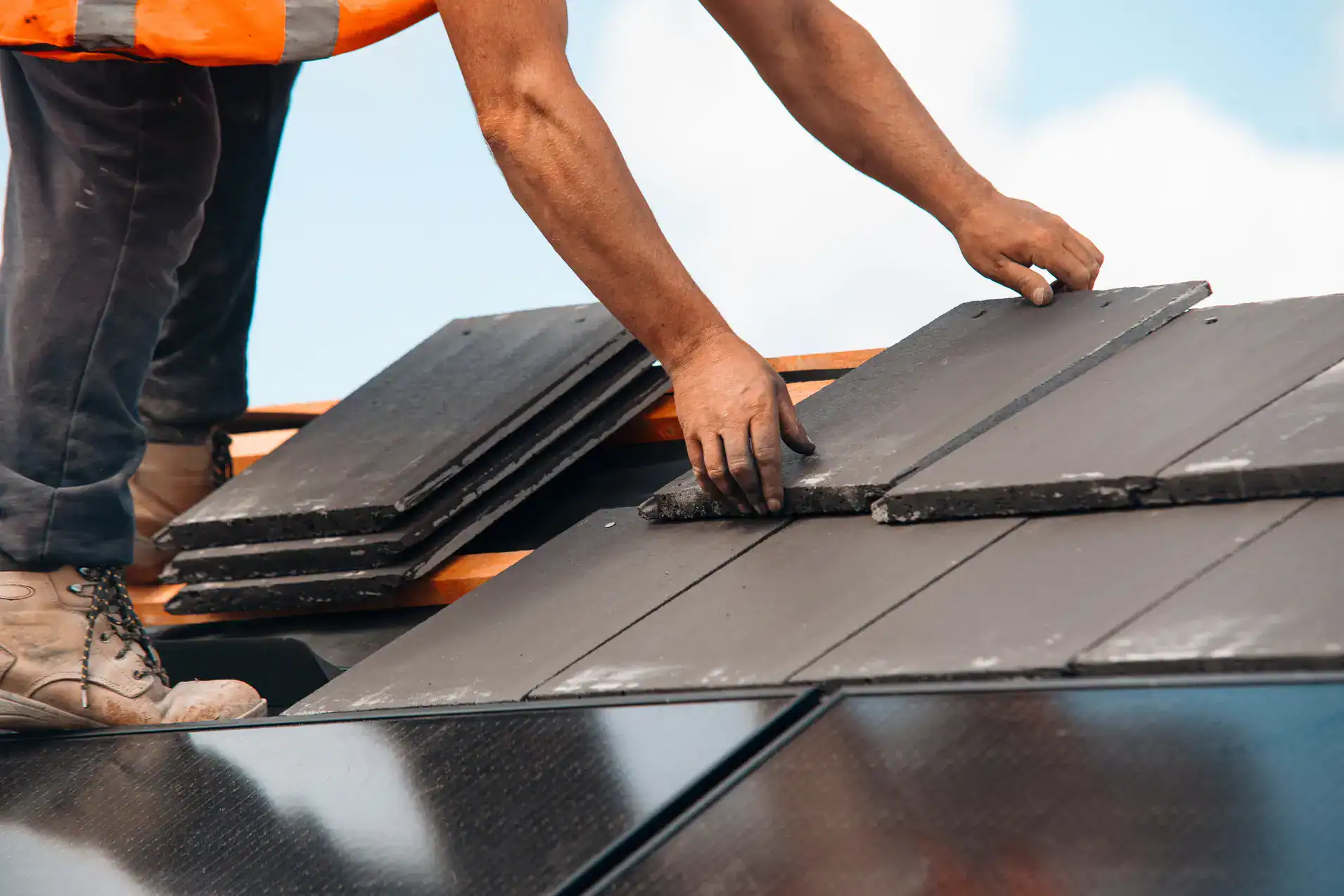
Your roof is the first priority. You don’t need to climb up there — binoculars or even a camera zoom will do for a first pass. Look for missing or curling shingles, but more importantly, look at the flashing around your chimney, skylights, and any roof penetrations. Flashing failures are the most common source of water damage after a Long Island winter, and they’re easy to miss because the shingles around them can look perfectly fine. If anything looks off, that’s a professional call.
Gutters are next. Clean them out if you haven’t already, but also check that they’re still properly pitched and firmly attached to the fascia. A hard winter can pull them loose. While you’re at it, look at where the downspouts discharge — water should be moving away from your foundation, not pooling against it.
Check your siding for cracks, warping, or any spots where caulk has separated from window and door frames. Salt air accelerates this across Suffolk County, not just in waterfront communities. If you can fit a nickel into a gap around a window or door frame, the caulk needs to go. Run your hand along exterior wood trim and look for soft spots — that’s early rot, and catching it now means a paint job and some filler, not a full replacement.
Your driveway and walkways deserve a look too. Freeze-thaw cycles crack concrete and asphalt, and small cracks let water in, which freezes again next winter and makes them larger. Sealing cracks in spring is cheap. Replacing a driveway is not.
Finally, if you have a deck, inspect the ledger board where it connects to the house, check for soft or discolored wood in the decking boards, and make sure the structural posts haven’t shifted or settled over winter.
Interior and Systems Checklist: The Things Most Homeowners Miss
Once you’ve done the exterior walk, head inside — specifically to the places you don’t visit often.
Your basement or crawl space should be your first stop. Look for water stains, efflorescence (the white chalky residue on concrete walls), or any standing moisture. These are signs that water is finding its way in, and spring rain will make it worse before it gets better. Check the sump pump while you’re down there — pour a bucket of water into the pit and make sure it kicks on.
In the attic, you’re looking for daylight coming through where it shouldn’t be, signs of moisture on the sheathing, or any evidence of animal activity that happened over winter. Attic ventilation issues often show up as frost staining or dark streaks on the wood — easy to miss, worth knowing about.
Test every smoke detector and carbon monoxide detector in the house. Replace batteries if they haven’t been changed in the past year. This takes ten minutes and isn’t negotiable.
For your HVAC system, swap out the filter if you haven’t done it recently, then turn on the air conditioning for the first time this season before you actually need it. Running it in mild weather lets you find out if something’s wrong without it being a crisis. The outdoor condenser unit should be clear of debris, and the fins shouldn’t be visibly bent or damaged. If the system hasn’t been professionally serviced in a year or more, spring is the right time.
Check outdoor hose bibs — turn them on slowly and look for drips or reduced pressure, which can indicate a pipe that froze and cracked over winter. If you have an irrigation system, get it inspected before you run it for the first time.
Here’s one that’s specific to Suffolk County and often left off national checklists: if your home is on a cesspool or septic system, spring is the time to have it inspected and pumped if it’s been more than two to three years. Spring rain saturates the soil and puts stress on these systems. Catching a problem before summer is far better than dealing with a failure in July.
DIY vs. Professional Spring Maintenance: Where to Draw the Line
There’s a real temptation to handle everything yourself — especially when the list feels manageable in the mild spring weather. Some of it, you absolutely should handle yourself. Changing HVAC filters, cleaning gutters, testing detectors, washing the exterior, and doing a thorough visual inspection of your siding, windows, and foundation are all reasonable DIY tasks for most homeowners.
But some things cross a line, and knowing where that line is will save you money and headaches in the long run. The tasks that require professional attention aren’t arbitrary — they’re the ones where a missed detail creates a liability, a safety risk, or a repair that costs significantly more than the original problem.
When It's Worth Calling a Professional Instead of Doing It Yourself
Roof repair is the clearest example. Walking on a roof without the right equipment and experience is dangerous, and improper repairs — even well-intentioned ones — can void manufacturer warranties or create new leak points. If your spring inspection turns up anything beyond a quick visual confirmation that everything looks fine, get a professional up there.
Chimney inspection and cleaning is another one. Long Island’s salt air degrades chimney mortar faster than most homeowners expect. A chimney that looks structurally sound from the ground can have significant deterioration in the flashing, crown, or liner that only shows up on a proper inspection. If you use your fireplace, this should be on the professional list every one to two years.
HVAC servicing — not just filter changes, but actual mechanical servicing — should be done by a licensed technician. The same goes for any electrical concerns you notice during your inspection: flickering lights, outlets that don’t work, a panel that looks older than you are. Many Suffolk County homes were built in the 1950s through 1970s, and electrical systems from that era can have issues that aren’t obvious but are worth knowing about.
Anything involving your foundation — cracks that are widening, water infiltration that’s getting worse, or structural shifts — warrants a professional assessment before you try to address it. Foundation issues don’t get better on their own, and the wrong repair approach can make them significantly worse.
The honest version of the DIY vs. professional question is this: if the consequence of getting it wrong is a large repair bill, a safety issue, or a problem that compounds over time, call someone who does this for a living.
How Spring Maintenance Connects to Home Renovation Costs in Suffolk County
One of the clearest arguments for doing spring maintenance proactively is what it costs when you don’t. Research consistently shows that homeowners who defer maintenance pay three to five times more when small problems eventually become unavoidable repairs. A flashing issue that costs a few hundred dollars to fix in April can become a $10,000 to $15,000 repair by the time water damage has worked its way into the roof deck, insulation, and ceiling below.
For Suffolk County homeowners, the math matters even more because home values here are high — the median sale price is around $640,000 — and the cost of full renovations reflects that. A full home renovation in Nassau and Suffolk County averages around $237 per square foot, with full-scope projects frequently running $150,000 to $200,000 or more. Kitchen remodels in this market typically run $21,000 to $40,000 for a mid-range project. Bathrooms fall in a similar range.
Those numbers aren’t meant to be alarming — they’re meant to put the cost of preventive maintenance in perspective. A few hundred dollars in spring repairs is not the same category of expense as a major renovation forced by years of deferred maintenance. Catching problems early keeps your renovation projects focused on improvements you want to make, not damage you’re forced to fix.
Spring is also the right time to plan ahead if you have a renovation on the horizon. Contractors in Suffolk County get booked quickly once the season picks up — by May and June, schedules are often full through the summer. If you’re thinking about a kitchen update, a bathroom refresh, new windows, or a deck addition, the homeowners who start those conversations in March and April are the ones who see their projects completed before fall.
Where to Start With Spring Home Maintenance in Suffolk County
The goal of a spring checklist isn’t to overwhelm you — it’s to give you a clear starting point. Walk the exterior, check the interior, test your systems, and flag anything that looks off. Most of what you find will be minor. Some of it will be worth addressing right away. A small amount might need a professional set of eyes.
If you’re in Huntington, Smithtown, Commack, Patchogue, Brookhaven, or anywhere else across Suffolk County, the same principle applies: the best time to find a problem is before it gets expensive.
We’ve been working on Long Island homes for years, and we know what the winters here actually do to a house. If your spring inspection turns up something you want a second opinion on — or if you’ve been putting off a renovation project and want to talk through the scope and timing — reach out to us. You can text us directly at 631-764-2795 for a quick response, or request a free estimate. No pressure, no runaround.
—
**Frequently Asked Questions**
**When is the best time to do spring home maintenance in Suffolk County?** Late March through early April is the sweet spot for Long Island. You’re past the last hard freeze, which means any winter damage is fully visible, but you still have time to make repairs before spring storms and summer humidity arrive. It’s also the window to book contractors before peak season fills up — schedules in Suffolk County get tight by May.
**What does the average home renovation cost in Suffolk County, NY?** Full home renovations in Nassau and Suffolk County average around $237 per square foot, with complete projects often landing between $150,000 and $200,000 depending on scope. Mid-range kitchen remodels typically run $21,000 to $40,000, and bathrooms fall in a similar range. Suffolk County also requires permits for most renovation work — $250 for projects up to $50,000, $500 for projects up to $100,000 — so it’s worth factoring that in when you’re budgeting.
**How do I know if my roof survived the winter?** Start from the ground with binoculars or a camera zoom. Look for missing or curling shingles, but pay close attention to the flashing around your chimney and any roof penetrations — that’s where failures most commonly start. If anything looks questionable, don’t get on the roof yourself. Have a professional take a look. On Long Island specifically, salt air and freeze-thaw cycles put extra stress on flashing and mortar, so even a roof that looks fine from the ground can have issues worth catching early.
**What home maintenance tasks can I do myself in the spring?** Gutter cleaning, HVAC filter replacement, smoke and carbon monoxide detector testing, exterior washing, and a thorough visual inspection of your siding, windows, and foundation are all reasonable DIY tasks. Where you want professional help: roof repairs, chimney inspection, HVAC mechanical servicing, anything electrical, and foundation concerns. The rule of thumb is simple — if getting it wrong leads to a larger problem or a safety risk, it’s worth the cost of a professional.
**Does salt air really affect homes that aren’t on the water?** Yes, and more than most homeowners expect. Salt air affects homes across Suffolk County, not just waterfront properties. It accelerates corrosion in metal components like gutters, flashing, chimney caps, and window hardware. It also degrades exterior caulk and paint faster than you’d see in an inland market. Spring is the right time to check those components and reseal or repaint anything that’s showing wear.