Summary:
If you’ve been searching for mobile home renovation costs and getting numbers that feel too vague to be useful, you’re not alone. The national averages you find online are a starting point — but they don’t account for Long Island labor rates, the age of most manufactured homes in Suffolk County, or the specific challenges that come with renovating a home that was built in the 1970s or 1980s. This guide is written for homeowners here, not somewhere in the middle of the country. By the time you finish reading, you’ll have a realistic sense of what renovation costs, what drives those numbers, and how to approach getting an estimate that actually holds up.
Mobile Home Renovation Cost: What Suffolk County Homeowners Are Actually Paying
Nationally, mobile home renovation costs range from about $8,000 on the low end to $40,000 for a more comprehensive project, with a commonly cited average around $25,000. Here in Suffolk County, expect to land closer to the middle or upper end of that range — and sometimes beyond it. Local contractors work in a higher-cost labor market, materials have to be sourced and delivered to the Island, and the specific wear patterns caused by our coastal climate mean more underlying issues tend to surface once work begins.
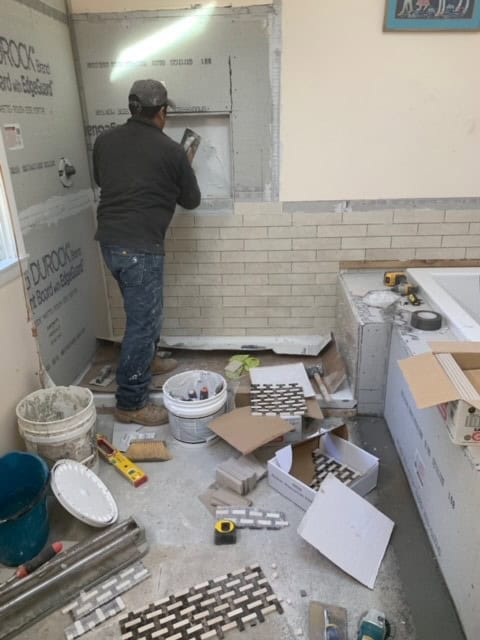
A targeted single-room update — a bathroom remodeling or a kitchen facelift — might run $10,000 to $20,000 depending on materials and what’s behind the walls. A full renovation of a single-wide home typically falls between $15,000 and $30,000 in this market. Double-wides, with their larger footprint, can push $40,000 to $50,000 or more for a thorough overhaul. These aren’t worst-case numbers — they’re honest ones based on what renovation work actually costs in Suffolk County.
Average Cost to Renovate a House vs. a Mobile Home
It’s a fair question, and the answer matters before you start planning. For a site-built home in Suffolk County, full renovations typically start around $100 per square foot using standard materials, with higher-end projects running $250 per square foot or more. Mobile homes tend to cost less per square foot to renovate — somewhere between $50 and $150 — but that doesn’t mean the overall project is cheap, and it doesn’t mean any general contractor is the right fit for the job.
Mobile homes have structural systems that differ significantly from stick-built construction. The load-bearing logic is different, the ceiling heights are often non-standard, and older homes — particularly those built before the mid-1980s — may have aluminum wiring, polybutylene plumbing, or original single-pane windows that need to be addressed before cosmetic work even begins. A contractor who hasn’t worked on manufactured homes before can make costly assumptions that don’t apply.
There’s also the regulatory layer. New York State requires that installers and mechanics working on the structural components of manufactured homes be licensed through the Department of State. That’s a New York-specific requirement, and it’s worth asking any contractor you’re considering whether they’re familiar with it. Pulling the right permits at the town level — whether you’re in Brookhaven, Huntington, Islip, or Smithtown — is part of doing the job correctly, not an optional step.
The other thing that separates mobile home renovation from a standard remodel is material selection. Heavier materials that work fine in a site-built home can stress a mobile home’s chassis over time. Experienced contractors factor this in when recommending flooring, cabinetry, and roofing systems — and the difference between a contractor who thinks about this and one who doesn’t shows up years later.
What Makes Renovation Cost Higher in Suffolk County Specifically?
Location shapes renovation costs more than most homeowners realize. Suffolk County sits in a coastal climate zone — salt air off the Long Island Sound and the Atlantic accelerates deterioration on exterior materials, particularly on manufactured homes with thinner wall assemblies than site-built construction. Freeze-thaw cycles in winter work on roof seals, skirting, and underpinning. Nor’easters and tropical remnants periodically cause real damage to roofing and siding. All of that means that when you open up a mobile home for renovation in Medford, Copiague, or Mastic, you’re more likely to find weather-related issues underneath the surface than you would in a drier, more temperate climate.
Labor costs on Long Island are simply higher than national averages — that’s the reality of working in this market. A contractor quoting you significantly below the ranges in this guide isn’t necessarily a bargain; they may be cutting somewhere you won’t see until later. As a general rule, if a bid comes in dramatically lower than comparable estimates, it’s worth asking exactly where the savings are coming from.
The age of the housing stock is another factor. Many mobile home communities in Suffolk County were established in the 1970s and 1980s. Homes that are 40 or 50 years old often need more than cosmetic updates — they need mechanical and systems work alongside the renovation itself. A bathroom remodel that would cost $8,000 in a newer home might run $15,000 once you factor in plumbing that needs to be brought up to current standards. That’s not a contractor padding the bill — that’s what responsible renovation looks like on an older home. Understanding this going in saves a lot of frustration later.
With Suffolk County median home prices well above $500,000, renovating a mobile home for $20,000 to $40,000 is a genuinely smart financial decision compared to the alternatives. The math is real, and it’s one of the reasons demand for mobile home renovation in this county has stayed consistent.
How to Get a Home Renovation Estimate You Can Actually Trust
Most homeowners know they need multiple estimates — but fewer know what to look for once they have them. A reliable estimate isn’t just a number at the bottom of a page. It’s a breakdown of materials, labor, and scope that lets you compare bids on equal terms and understand what you’re actually paying for.
Materials typically account for around 40% of total renovation cost, with labor, overhead, and reasonable profit margins making up the rest. When an estimate doesn’t show that breakdown, you’re essentially being asked to trust a number without any way to evaluate it. That’s not a position you want to be in before committing to a project.
What Should a Home Renovation Estimate Include?
A written, itemized estimate is the baseline. It should spell out what work is being done, what materials are being used, what the labor cost covers, and what the timeline looks like. If a contractor gives you a single number on a handshake and calls it an estimate, that’s not enough — not for a project of this scale.
The estimate should also address what happens if something unexpected comes up. Renovation work on older mobile homes regularly surfaces issues that weren’t visible at the start — deteriorated subfloor, outdated wiring, plumbing that needs to be rerouted. A contractor who’s been doing this long enough will tell you upfront how they handle those discoveries: what triggers a change order, how you’ll be notified, and what the process looks like. That conversation before the project starts is a strong indicator of how the project itself will go.
Ask every contractor you’re considering to walk you through their process, not just their price. How do they communicate during the project? Who is your point of contact? What does the schedule look like, and how do they handle delays? The answers tell you a lot more than the number at the bottom of the estimate.
One thing worth knowing: the cheapest bid is rarely the best deal in this market. A Long Island contractor who understands manufactured home construction, pulls the right permits through your town’s building department, and carries proper insurance is going to cost more than someone who skips those steps. The difference shows up in the finished work — and in whether the project holds up five years from now.
Cost-Saving Strategies That Don't Cut Corners on Quality
There are real ways to reduce mobile home renovation costs without compromising the result, and they mostly come down to planning and sequencing rather than finding cheaper materials or labor.
Phasing the project is one of the most effective strategies. Instead of tackling the kitchen, bathrooms, and flooring simultaneously, prioritize the work that addresses structural or systems issues first — roof repair, plumbing, electrical — and plan cosmetic updates in a second phase. This spreads the cost over time and ensures you’re not putting new finishes over problems that haven’t been fixed yet. It also gives you a chance to evaluate the contractor’s work before committing to the full scope.
Being decisive about materials before work begins saves money in ways that aren’t obvious until you’ve lived through a project that stalled because of back-and-forth on selections. Material delays are one of the most common causes of cost overruns and schedule extensions. Coming into the planning phase with a clear sense of what you want — even if the contractor helps you refine it — keeps the project moving.
It’s also worth having an honest conversation with your contractor about where the budget is best spent and where standard materials perform just as well as premium ones. In a mobile home, some upgrades make a significant quality-of-life difference — good insulation, durable flooring, updated HVAC — while others are purely aesthetic and can be done more affordably without any functional trade-off. An experienced contractor who’s worked on manufactured homes in Suffolk County can tell you where that line is. That kind of guidance is part of what you’re paying for when you hire someone with real experience in this specific type of work.
Winter is also worth considering for timing. Demand for renovation contractors in Suffolk County peaks in spring and summer. Scheduling interior work — kitchens, bathrooms, flooring — during the slower winter months can improve contractor availability and occasionally result in better pricing, simply because the competition for their schedule is lower.
Ready to Plan Your Suffolk County Mobile Home Renovation?
The most important thing you can take from this guide is that mobile home renovation cost in Suffolk County is real, manageable, and worth planning carefully. National averages give you a starting point, but the actual number for your home depends on its age, its condition, what you want to do with it, and who you hire to do the work.
Get written estimates. Ask about the process, not just the price. Make sure whoever you hire understands manufactured home construction specifically — not just general remodeling — and knows how to navigate permits at the town level here on Long Island.
If you’re in Huntington, Smithtown, Commack, Brookhaven, or anywhere else in Suffolk County and you’re ready to get a real number for your project, we’re happy to walk through it with you. You can call or text 631-764-2795 for a quick response — no pressure, just a straight conversation about what your renovation actually involves and what it’s likely to cost.