Summary:
Most Suffolk County homeowners don’t think about winter preparation until the first cold snap hits — and by then, the contractors are booked, the temperatures are dropping, and whatever was a small problem in October has turned into something much more expensive. Long Island winters don’t give you a lot of warning. Nor’easters roll in fast, freeze-thaw cycles crack what looked fine last spring, and an uninsulated pipe in your attic can release over 250 gallons of water a day if it bursts. This guide covers what you actually need to do — and when — to protect your home before the season turns.
Complete Home Winterization Checklist for Suffolk County
Winterizing your home in Suffolk County isn’t the same as winterizing a home in a landlocked suburb. You’re dealing with coastal salt air that corrodes metal components faster than most people realize, a water table that sits high in communities along the South Shore, and a housing stock where a significant number of homes were built between 1950 and 1975 — meaning original windows, aging boilers, and insulation levels that made sense fifty years ago but don’t hold up today.
The checklist that actually works here addresses five zones: your roof and exterior, your windows and doors, your heating system, your plumbing, and your emergency readiness. Miss one, and you’ve left a door open for the kind of damage that turns a manageable fall project into a January crisis.
Winter Home Maintenance: Getting Your Heating System Ready Before Cold Weather Hits
Your heating system is the one thing you absolutely cannot afford to have fail in February. And yet it’s the thing most homeowners ignore until it stops working. A professional boiler or furnace tune-up before the season starts isn’t just routine maintenance — it’s the difference between a warm house and an emergency service call on the coldest night of the year, when every HVAC technician in Suffolk County is already overbooked.
For the large number of homes throughout Huntington, Smithtown, and Commack that run on heating oil, this matters even more. Oil boilers that haven’t been serviced in a few years lose efficiency gradually — you might not notice it month to month, but you’ll feel it in your fuel bill. Modern high-efficiency heating systems can be up to 40% more efficient than models made before 2001. If your boiler is getting up there in age, it’s worth having someone take an honest look at it before winter, not after it leaves you without heat.
Beyond the boiler itself, your ductwork deserves attention. Forced-air systems lose somewhere between 20 and 30% of conditioned air through leaks in the ducts — air you’re paying to heat that never reaches the rooms you’re trying to warm. Sealing those leaks is one of the highest-return things you can do before winter, and it’s not a complicated fix when caught early.
Don’t overlook your carbon monoxide and smoke detectors either. Heating season is when CO incidents spike, and if your detectors are more than seven years old, they may not be functioning reliably. Swap them out now, while it’s a ten-minute errand rather than an emergency.
Preparing Your Home for Winter: What Suffolk County Roofs and Gutters Actually Need
Your roof takes more abuse on Long Island than almost anywhere else in New York. Nor’easters bring wind gusts that can top 50 miles per hour, and the freeze-thaw cycles that characterize Long Island winters — not a consistent deep freeze, but a back-and-forth between freezing and thawing — are particularly destructive to roofing materials, flashing, and masonry.
The biggest roof-related winter threat in Suffolk County is ice dams. They form when heat escapes through an under-insulated attic, melts the snow on your roof unevenly, and that water refreezes at the cold eaves. Once an ice dam forms, water backs up under your shingles and finds its way into your home. The damage usually shows up weeks later as water stains on ceilings or walls — by which point the underlying problem has already been working on your structure for a while.
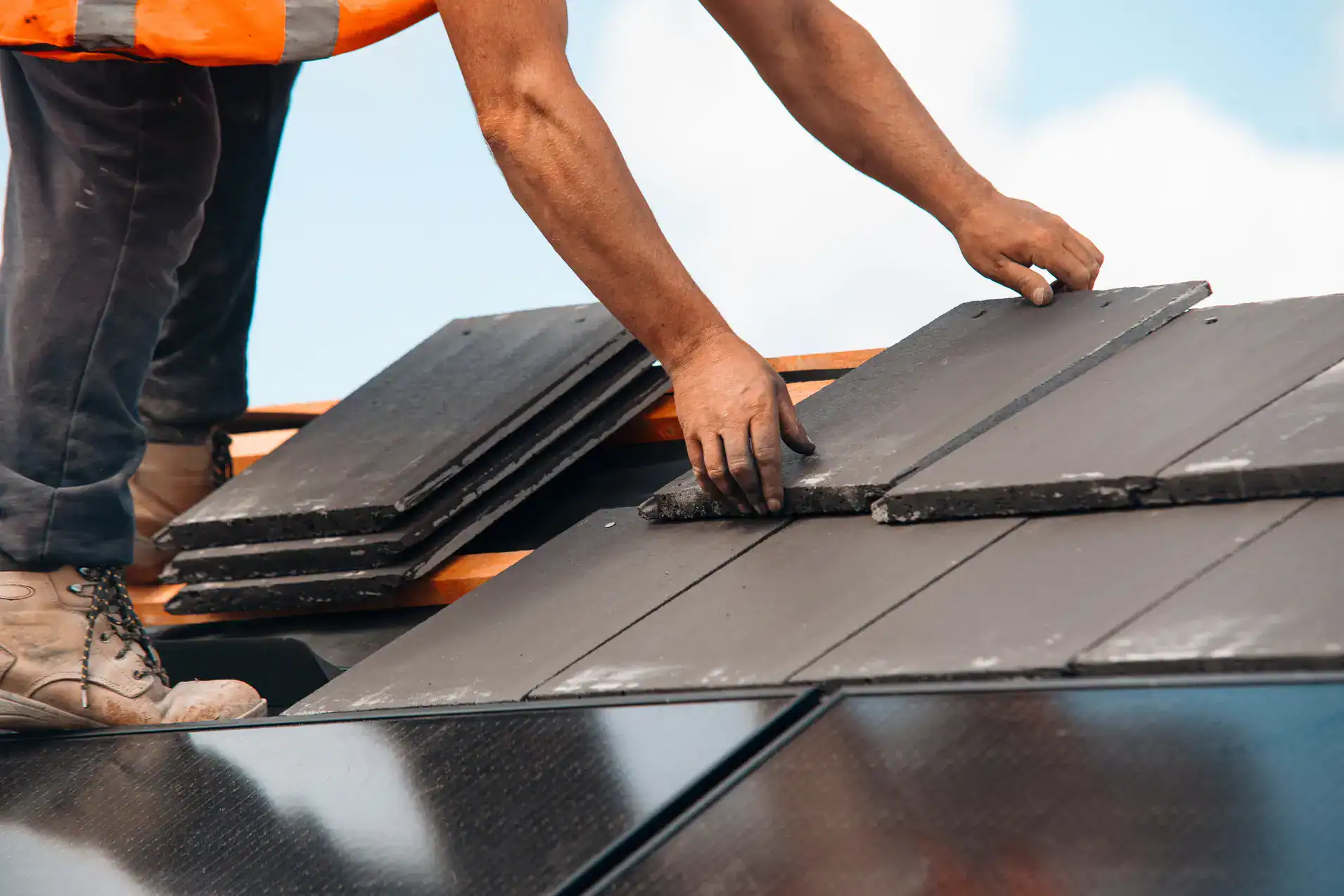
Preventing ice dams starts with your attic insulation, not your roof. If your attic floor isn’t insulated to the R-value recommended for New York’s climate zone, heat will keep escaping and the cycle will keep repeating. A roof inspection in the fall can also catch deteriorating flashing, cracked or missing shingles, and any areas where water is already finding a path in — before that path gets worse under the weight of a January snowstorm.
Gutters are the other piece people underestimate. Clogged gutters don’t drain properly, and standing water in a gutter freezes, expands, and can pull the gutter away from the fascia entirely. The right time to clean them is after the leaves have finished falling — late October through early November for most of Suffolk County — and before the first hard freeze. If your gutters are in rough shape, this is also the time to look at whether they’re pitched correctly and whether the downspouts are directing water far enough away from your foundation.
For homes in coastal communities — Bay Shore, Islip, Patchogue, and the barrier island communities like Fire Island — salt air is an added factor. Metal flashing, fasteners, and gutters corrode faster with consistent salt exposure. What looks fine from the ground may have significant deterioration that only a close inspection will catch.
Preparing Your Home for Winter: Plumbing Protection and Weatherproofing
Frozen pipes are one of the most expensive things that can happen to a house. A single burst pipe can cost anywhere from $5,000 to $70,000 in total damage — not just the pipe repair, but the water damage to floors, walls, insulation, and anything stored in the affected area. And a small crack in a pipe can release more than 250 gallons of water per day before you even realize what’s happening.
The pipes most at risk are the ones in unheated or under-insulated spaces: attics, crawl spaces, exterior walls, and garages. In many of the older homes throughout Huntington, Smithtown, and Commack, these spaces weren’t designed with modern insulation standards in mind. Pipe insulation is inexpensive and straightforward to install in accessible areas, but it’s easy to miss the spots that actually matter without knowing what to look for.
How to Prevent Frozen Pipes in a Long Island Home
The first step is knowing where your vulnerable pipes are. Anything running through an exterior wall, an unheated basement, or an attic without proper insulation is a candidate. In Suffolk County’s older housing stock — and there’s a lot of it — you may also have galvanized plumbing that’s already narrowed over the decades, making it more susceptible to freezing and more likely to fail when it does.
Pipe insulation sleeves are a practical first line of defense for accessible pipes. For pipes in exterior walls, the solution is usually improving the insulation in that wall cavity — which may involve more than a weekend DIY project depending on how the wall is constructed. We can tell you quickly whether you’re dealing with something simple or something that warrants more attention.
Don’t forget your outdoor hose bibs. Any hose left connected to an exterior spigot in November is a liability — water trapped in the hose can freeze back into the pipe and cause a burst. Disconnect hoses, drain the bibs, and if your home doesn’t have frost-free spigots, consider adding interior shutoffs for those lines. If you have an irrigation system, professional winterization — which typically runs between $60 and $120 — is a fraction of what a single broken line will cost you to repair in the spring.
For homeowners along the South Shore in communities like Bay Shore, Babylon, or East Patchogue, basement water intrusion is a related concern. The water table in those areas sits high, and winter snowmelt combined with saturated soil can push water against foundation walls in ways that catch people off guard. Make sure your sump pump is operational and that your backup power situation is solid before Nor’easter season gets underway.
Weatherproofing Windows, Doors, and Air Leaks in Your Suffolk County Home
Air leaks are the silent tax on every heating bill. In a typical home, about 43% of annual energy consumption goes toward space heating — and if the building envelope has gaps, you’re losing 25 to 40% of that heated air before it does you any good. That’s not a rounding error. That’s a meaningful portion of what you’re spending on heating oil or gas every winter, going nowhere.
The most common leak points are around windows, doors, and any penetration through the exterior wall — pipes, wires, vents. In older Suffolk County homes with original single-pane windows, the windows themselves are often a significant source of heat loss even when they’re closed. Replacing them with modern double- or triple-pane units is an investment that pays back in energy savings and comfort, and a new steel entry door alone can return close to 97% of its cost in added home value while making a noticeable difference in drafts.
For homes that aren’t ready for a full window replacement, weatherstripping and caulking are meaningful stopgaps. The key is being thorough — running a hand along the interior perimeter of windows and exterior doors on a cold, windy day will tell you quickly where the drafts are coming from. Pay attention to the basement rim joist too, which is one of the most consistently under-insulated areas in Long Island’s older homes and one of the easiest to address with rigid foam insulation.
One thing worth knowing: New York State’s NYSERDA program offers rebates and incentives for energy efficiency upgrades, including insulation and window improvements. National Grid customers in Suffolk County may be eligible for additional utility rebates on top of state incentives. It’s worth checking before you start any major weatherization work — the savings can offset a meaningful portion of the project cost.
When Should You Start Winterizing Your Home in Suffolk County?
The honest answer is: earlier than you think. Suffolk County temperatures can drop below freezing as early as October, and the window between “plenty of time” and “scrambling to find someone available” closes faster than most homeowners expect. September and October are the right months to schedule inspections, line up any needed repairs, and handle the weatherproofing work that’s hard to do once the cold sets in.
The cost of waiting is real. Emergency contractor rates are higher, availability is worse, and damage that could have been caught in the fall tends to compound through the winter before it’s discovered. A burst pipe in January, an ice dam that’s been working on your ceiling since December, a heating system that gives out during a Nor’easter — these aren’t just expensive. They’re disruptive in ways that a little fall preparation would have prevented entirely.
If you’re not sure where your home stands heading into winter, that’s exactly what we’re here for. We’ve been helping Suffolk County homeowners — from Huntington to Smithtown, Commack to Patchogue — get ahead of winter for over 20 years. We know what Long Island winters do to houses, and we know what to look for before it becomes a problem. Reach out and we’ll take it from there.