Summary:
Suffolk County doesn’t get to opt out of hurricane season. The Atlantic is right there, the Sound is right there, and the storms that have hit this area — Sandy, Irene, the string of disasters from 2007 through 2013 — weren’t rare flukes. They were reminders that Long Island is genuinely exposed in ways most of the country isn’t.
The good news is that most storm damage is preventable, or at least significantly reducible, if you take the right steps before June 1. This guide covers what to actually do: what to inspect, what to document, how to choose a contractor, and why doing it now matters more than doing it when a storm is already named.
Storm Damage Prevention for Suffolk County's Coastal Conditions
Storm damage prevention on Long Island isn’t the same as storm prep in, say, central New York. The combination of Atlantic exposure on the south shore, Long Island Sound on the north, salt air year-round, and aging housing stock — much of it built in the 1950s and 60s, long before modern wind-resistance codes — creates a specific set of vulnerabilities that generic checklists don’t address.
Your roof is the most obvious starting point, but it’s not the only one. Siding, windows, gutters, and even your foundation drainage all play a role in how your home handles a major storm. If any one of those systems has a weak point, the storm will find it.
Home Storm Preparation: What to Inspect Before Hurricane Season Starts
The window for meaningful structural prep closes fast. By the time a storm is in the five-day forecast, contractors are booked, lumber yards are picked over, and you’re left with whatever you’ve got. The time to assess your home is April or May — not the week a named storm appears on the radar.
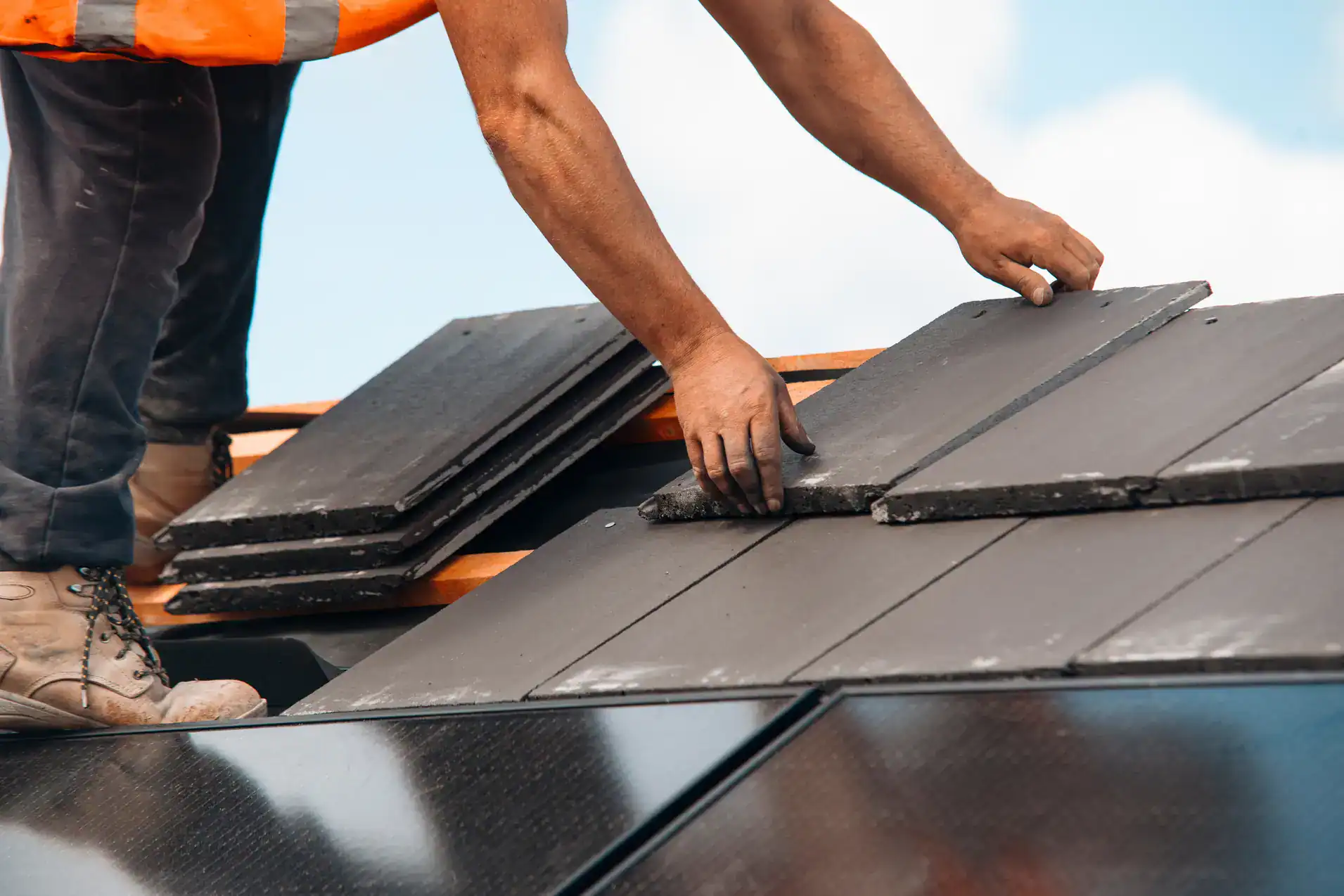
Start with your roof. Look for missing or lifted shingles, damaged flashing around chimneys and skylights, and any soft spots that might indicate water intrusion underneath. On Suffolk County’s south shore — Sayville, Islip, Amity Harbor — roofs take a beating from salt air that accelerates material breakdown faster than you’d see ten miles inland. A roof that looked fine last October may have degraded meaningfully over the winter.
Your gutters and downspouts matter more than most homeowners realize. Clogged or sagging gutters during a storm can direct water straight into your fascia, soffit, and eventually your attic. Make sure they’re clear and properly pitched, and check that downspouts are directing water away from the foundation — not pooling against it.
Windows and exterior doors are another common failure point. Older windows, particularly in homes built before the 1980s, may not have adequate sealing or structural integrity to handle sustained high winds. If you’re in a coastal zone — anywhere in the Zone A or Zone B evacuation areas that Suffolk County designates — this is worth taking seriously. Hurricane shutters or impact-resistant windows are a more reliable solution than plywood boarding, which is a last resort, not a strategy.
Finally, walk your property and think about what’s outside. Patio furniture, grills, decorative planters, even a lightweight storage shed — anything that can become a projectile in 60+ mph winds needs to be secured or moved indoors before a storm arrives. This is the easiest part of storm prep and consistently the most overlooked.
Emergency Contractor Contact: Why You Need One Before the Storm, Not After
After Hurricane Sandy hit Suffolk County in October 2012, demand for contractors was immediate and overwhelming. Homeowners who didn’t already have a relationship with a local contractor spent weeks — sometimes months — waiting for help, or worse, ended up with out-of-state crews who had no knowledge of Suffolk County’s permit requirements, no local license, and no accountability once the job was done.
This is the part of storm preparation that almost no one thinks about until it’s too late. Having an emergency contractor contact saved in your phone before hurricane season starts isn’t paranoia — it’s the same logic as keeping your insurance agent’s number handy. You hope you don’t need it. You’re glad you have it when you do.
What you want in that contact is a contractor who is licensed in Suffolk County, carries both general liability and workers’ compensation insurance, and has actual local experience — not someone who drove up from out of state chasing storm work. Suffolk County requires home improvement contractor licensing, and that requirement exists for a reason. An unlicensed contractor doing storm repair work on your home creates real legal and financial exposure for you, not just them.
We’ve been working across Suffolk County — Huntington, Smithtown, Commack, Cold Spring Harbor, Sound Beach, Patchogue, and more — for over 36 years. When a storm rolls through, we know which towns are dealing with what, we understand the local permit process, and we can provide emergency stabilization like tarping and patching to stop water intrusion while permanent repairs are scheduled. That’s not something you can get from a contractor who showed up three days after the storm from four states away.
Save a local contractor’s number now. Text us at 631-764-2795 if you want to get on our radar before the season starts — that’s genuinely the fastest way to reach us.
Insurance Documentation and Post-Storm Claims: What Suffolk County Homeowners Should Know
Here’s something a lot of Long Island homeowners don’t find out until it’s too late: standard homeowners insurance often doesn’t cover wind damage in coastal areas. If your home is near the water in Nassau or Suffolk County, there’s a real chance you need a separate windstorm policy — and a separate flood policy on top of that. These are not the same thing, and neither is automatically included in a standard policy.
Before hurricane season, pull out your declarations page and read it. Know what your deductible is for wind events — it’s often calculated as a percentage of your home’s insured value, not a flat dollar amount, which can be a significant surprise after a storm. And if you don’t have flood insurance, understand that FEMA’s flood zone maps have been updated in recent years, and more Suffolk County properties are now in designated flood zones than were there a decade ago.
How to Document Your Home Before a Suffolk County Hurricane Season
The single most useful thing you can do for your insurance claim — before any storm hits — is document your home’s current condition thoroughly. Walk through every room with your phone and record video. Open closets, pan across ceilings, capture the exterior from all four sides. Go up in the attic if you can safely do so and document the decking and insulation condition. This takes maybe 45 minutes and can make an enormous difference in how smoothly an insurance claim goes.
For your roof specifically, having a professional inspection done before storm season and keeping that report creates a paper trail that protects you. If your insurer tries to argue that damage was pre-existing, you have documentation showing the condition of your roof as of May, before any storm occurred. That’s a meaningful protection, especially in a market like Suffolk County where insurance disputes after major storms are common.
Store your documentation somewhere it won’t be destroyed in the storm itself. Cloud backup is the simplest answer — upload photos and video to Google Drive or iCloud so they’re accessible from anywhere, even if your home is damaged. Keep digital copies of your insurance policies, your home deed, and any contractor warranties in the same place. If you’re in a coastal evacuation zone and you have to leave quickly, you want those documents accessible from your phone.
The other thing worth doing before the season is reviewing your contractor warranties. If you’ve had roof work, siding, or window installation done in the last several years, locate those warranty documents and understand what’s covered. Some manufacturer warranties have specific requirements around storm damage claims, and knowing that in advance prevents unpleasant surprises.
Post-Hurricane Damage Assessment: What to Do in the 24 to 48 Hours After a Storm
Once a storm passes and it’s safe to go outside, the first priority is a careful visual assessment — not repairs, not cleanup, just understanding what you’re dealing with. Walk the perimeter of your home and look for obvious structural damage: missing shingles, displaced siding, cracked or broken windows, downed trees in contact with the structure, and any visible damage to your gutters or roof edge. Take photos of everything before anything is moved or cleaned up. That documentation is your starting point for any insurance claim.
Do not climb onto your roof immediately after a storm. Wet surfaces, hidden damage, and compromised decking make post-storm roof access genuinely dangerous for anyone who isn’t a trained professional. If you suspect roof damage based on what you can see from the ground — or if you have water intrusion inside the home — that’s the moment to call for emergency stabilization. A temporary tarp installed correctly can stop a significant amount of secondary water damage while permanent repairs are scheduled.
Inside the home, check your attic first if you can do so safely. Water stains on the decking or insulation, daylight visible through the roof, or wet insulation are all signs of roof penetration that may not be obvious from the exterior. Then work through the rest of the house systematically — ceilings, walls near windows and doors, and anywhere you’ve had water issues in the past.
Storm damage isn’t always dramatic. More often, a storm leaves behind lifted flashing, a handful of missing shingles, a compromised window seal, or gutters pulled away from the fascia — damage that’s easy to miss on a quick walkthrough but creates real problems over the following months if it isn’t addressed. Getting a professional post-storm inspection, even when the damage looks minor, is worth doing.
Long Island Hurricane Prep Comes Down to One Thing: Don't Wait
Suffolk County has experienced seven Presidentially Declared Disasters in a single seven-year stretch. Eastern Long Island consistently ranks among the most hurricane-vulnerable areas in the entire country. These aren’t statistics meant to alarm you — they’re the reason that getting ahead of storm season, even by a few weeks, makes a real difference in how your home comes through it.
The steps that matter most aren’t complicated. Inspect your roof and exterior before June. Document your home’s condition for insurance purposes. Know your policy’s actual coverage. And have a local, licensed contractor’s contact information saved before you need it urgently.
If you want a straightforward assessment of where your home stands heading into storm season, we’ve been doing this work across Suffolk County for over 36 years. Reach out before the season gets going — that’s when we can actually help.